Guru Nanak Khalsa Academy Organizes Gurmat Sangeet Children’s Samagam in Amritsar
Young students present Gurbani Kirtan under the leadership of Dr. Satpreet Singh, PhD, strengthening their connection
Press Release Disclaimer: This is a press release distributed through the XPR Media network. It has not been independently verified by our newsroom.
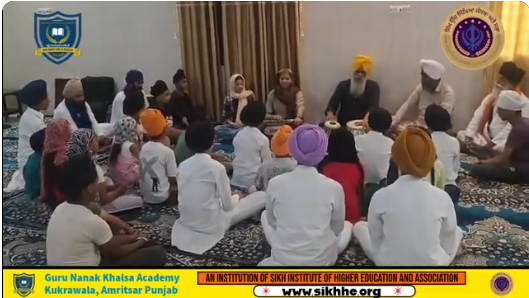

Young students present Gurbani Kirtan under the leadership of Dr. Satpreet Singh, PhD, strengthening their connection with Gurmat Sangeet and Sikh heritage
AMRITSAR, PUNJAB, INDIA, August 20, 2026 /EINPresswire.com/ — Guru Nanak Khalsa Academy (GNKA), an institution of the Sikh Institute of Higher Education and Association (SIHKHE), organized a Gurmat Sangeet Children’s Samagam at Gurdwara Sahib, Kukrawala Colony, Harse Chhina, Amritsar, bringing together young students, parents, teachers, and members of the Sangat for a program dedicated to Gurbani Kirtan, Gurmat Sangeet, and the preservation of Sikh heritage.
Held under the leadership of Dr. Satpreet Singh, President of Guru Nanak Khalsa Academy, and with the dedicated guidance of Ustad Onkar Singh Wadala Ji, Gurmat Sangeet Instructor, the Samagam provided young students with an opportunity to present Gurbani Kirtan before the Sangat in the spiritually centered environment of the Gurdwara Sahib.
The program reflected GNKA’s commitment to creating meaningful educational opportunities through which children can develop a deeper relationship with Gurbani while learning about the musical, spiritual, and cultural traditions associated with the Sikh faith.
The young participants presented Gurbani Kirtan with devotion and discipline, demonstrating the learning and preparation undertaken under the guidance of their instructor. Their participation also highlighted the important role that families, educators, Gurdwaras, and the wider Sangat play in transmitting Sikh traditions from one generation to the next.
Connecting Children With Gurbani Through Gurmat Sangeet
Gurmat Sangeet holds a significant place within Sikh tradition, bringing together Gurbani, music, spiritual reflection, and congregational participation. For young learners, the study of Gurmat Sangeet provides an opportunity not only to develop musical abilities but also to engage more closely with Gurbani and the values embedded within Sikh spiritual life.
The Children’s Samagam was organized with this educational purpose at its center.
Through regular learning, practice, and participation, children can become familiar with the discipline associated with Gurbani Kirtan while developing confidence in presenting before the Sangat. The learning process encourages attention, patience, pronunciation, listening, musical understanding, and respect for the spiritual purpose of Kirtan.
GNKA views such programs as an important component of Sikh education because they enable children to experience heritage as a living tradition rather than solely as a subject of historical study.
“Gurmat Sangeet provides our children with a meaningful way to connect with Gurbani and with the spiritual and cultural heritage that has been entrusted to successive generations,” said Dr. Satpreet Singh, President of Guru Nanak Khalsa Academy. “When children learn Gurbani Kirtan and have the opportunity to present it before the Sangat, they participate directly in a living Sikh tradition. Our responsibility as educators, parents, and community members is to provide them with the guidance and opportunities necessary to continue that journey.”
Dr. Satpreet Singh also recognized the collective effort required to sustain educational programs for younger generations.
“The encouragement of parents, teachers, instructors, Gurdwaras, and the Sangat is essential,” Dr. Singh added. “The participation we witnessed at this Samagam demonstrates what can be accomplished when a community comes together to support children in learning Gurbani, Gurmat Sangeet, and Sikh heritage.”
Dedicated Guidance From Ustad Onkar Singh Wadala
The preparation of the participating students was carried out under the dedicated guidance of Ustad Onkar Singh Wadala Ji, Gurmat Sangeet Instructor.
His work with the children focuses on helping students develop the discipline and understanding required for Gurbani Kirtan while maintaining the devotional character of the tradition.
Teaching Gurmat Sangeet to children requires patience, consistency, and an understanding of each student’s stage of development. Young learners must gradually develop musical skills while also understanding that Gurbani Kirtan is rooted in spiritual practice and Seva.
The Samagam allowed the students to bring their learning from instruction and practice into a congregational environment.
GNKA expressed its appreciation to Ustad Onkar Singh Wadala Ji for his commitment to teaching the younger generation and for guiding students as they develop their understanding of Gurbani Kirtan and Gurmat Sangeet.
His contribution to the program reflects the essential role knowledgeable and dedicated instructors play in ensuring that traditional knowledge is transmitted carefully to future generations.
Young Students at the Center of the Samagam
The children were the central focus of the gathering.
Their Gurbani Kirtan presentations represented the culmination of learning, preparation, regular practice, and encouragement from instructors and families. Presenting before the Sangat gave the young participants an opportunity to apply their learning in an environment where Gurbani is experienced collectively.
For many children, participating in a Samagam can also build confidence and strengthen their sense of belonging within the Sikh community.
GNKA believes that providing young students with such opportunities can encourage them to continue studying Gurbani Kirtan and to develop a broader interest in Sikh history, Punjabi language, Gurmat principles, and other areas of Sikh education.
The Academy emphasized that the purpose is not simply to prepare children for an individual performance. The broader objective is to encourage sustained learning and a lifelong connection with Gurbani and Sikh heritage.
The enthusiastic participation of the children demonstrated the possibilities created when young learners receive consistent guidance and encouragement.
Preserving Sikh Musical Heritage Through Education
The Gurmat Sangeet Children’s Samagam also highlighted the importance of preserving Sikh musical heritage through structured education and active participation.
Sikh musical traditions have been carried forward across generations through teaching, practice, oral transmission, scholarship, and participation in the Gurdwara and Sangat. Continuing this heritage requires opportunities for younger generations to learn directly from knowledgeable instructors and experience Gurbani Kirtan within its appropriate spiritual and community setting.
GNKA seeks to contribute to this continuity by creating educational environments in which children can learn, practice, ask questions, develop skills, and participate.
Children’s Samagams provide an important extension of classroom and instructional learning. They enable students to experience the relationship between individual preparation and collective participation in the Sangat.
By combining structured learning with opportunities to participate at the Gurdwara Sahib, children can develop an understanding of Gurmat Sangeet as a living practice connected with Gurbani, community, and Seva.
Parents, Teachers and Sangat Strengthen the Learning Process
GNKA acknowledged the important contribution made by the parents and families of participating students.
Parents often provide the foundation that enables children to continue learning. Their responsibilities may include encouraging regular practice, bringing children to instruction, supporting their preparation, and reinforcing the importance of education and participation.
Teachers and instructors provide specialized knowledge and structure, while the Sangat creates a supportive community environment where young students can experience the collective dimension of Sikh life.
The Academy expressed its heartfelt appreciation to the parents who encouraged their children to participate in the Samagam and supported their preparation.
GNKA also recognized the teachers, volunteers, Sevadars, and members of the Sangat whose participation contributed to the successful organization of the gathering.
The Samagam demonstrated how families, educators, institutions, Gurdwaras, and community members can work together to create meaningful opportunities for children.
Such cooperation is particularly important in ensuring that Sikh heritage remains accessible and relevant to younger generations.
Amritsar Provides a Meaningful Setting for the Samagam
The location of the program in Amritsar provided an especially meaningful setting for a gathering dedicated to Gurmat Sangeet and the education of young Sikhs.
Amritsar occupies a central place in Sikh history and spiritual life and continues to serve as an important center for Sikh religious, educational, and cultural activity.
Within this historic environment, the participation of children in Gurbani Kirtan represented both continuity and responsibility: traditions received from previous generations being studied, practiced, and carried forward by young learners.
Gurdwara Sahib, Kukrawala Colony, Harse Chhina, provided the setting in which students could share their learning with the Sangat.
The gathering also illustrated the important role local Gurdwaras can play in supporting educational organizations and providing children with opportunities for participation in Sikh community life.
Learning That Continues Beyond the Samagam
For Guru Nanak Khalsa Academy, the value of the Samagam extends beyond a single event.
GNKA encourages students to approach Gurmat Sangeet as an ongoing journey of learning. Continued study can strengthen musical abilities, deepen familiarity with Gurbani, and help children develop patience, concentration, responsibility, confidence, and discipline.
Participation in Gurbani Kirtan can also introduce young learners to the principle that knowledge and ability can be used in the spirit of Seva.
The Academy hopes that experiences such as the Amritsar Samagam will inspire students to continue their studies and maintain an active connection with Gurbani as they grow.
GNKA also believes that investment in children’s education contributes to the long-term preservation of Sikh heritage. When children are provided with opportunities to learn directly from instructors, practice regularly, participate in the Gurdwara, and receive encouragement from the Sangat, they become active participants in carrying traditions forward.
An Institutional Commitment to Sikh Education
As an institution of the Sikh Institute of Higher Education and Association (SIHEA), Guru Nanak Khalsa Academy’s work in Gurmat Sangeet forms part of a broader commitment to education and the preservation and advancement of Sikh intellectual, spiritual, and cultural heritage.
GNKA seeks to provide learning opportunities that connect younger generations with Sikh values, history, Gurbani, culture, and traditions.
Programs such as the Gurmat Sangeet Children’s Samagam demonstrate how this educational mission can be translated into community participation.
By bringing together children, instructors, families, Gurdwaras, and the Sangat, the Academy aims to create environments in which learning becomes both personal and collective.
GNKA intends to continue supporting educational initiatives that provide children with meaningful opportunities to engage with Gurbani and Sikh heritage.
The Academy recognizes that preserving Gurmat Sangeet for future generations requires sustained teaching, knowledgeable instructors, committed families, supportive institutions, and opportunities for students to put their learning into practice.
The Amritsar Samagam brought these elements together through the participation of young students and the support of the wider community.
Guru Nanak Khalsa Academy expressed its gratitude to Ustad Onkar Singh Wadala Ji for his dedicated guidance and to the management and Sevadars of Gurdwara Sahib for supporting the program.
The Academy also thanked the parents, teachers, volunteers, and Sangat for encouraging the children and contributing to an environment in which younger generations can continue learning Sikh traditions.
Above all, GNKA congratulated the participating children for their commitment to learning and presenting Gurbani Kirtan.
Their participation represented the central purpose of the Samagam: enabling the next generation to learn, experience, preserve, and carry forward the rich heritage of Gurmat Sangeet.
About Guru Nanak Khalsa Academy
Guru Nanak Khalsa Academy (GNKA) is an institution of the Sikh Institute of Higher Education and Association (SIHEA). GNKA supports educational initiatives that connect children and younger generations with Gurbani, Gurmat Sangeet, Sikh history, values, culture, and heritage.
Through educational programs, Gurmat Sangeet instruction, children’s Samagams, and community-based learning initiatives, GNKA works with educators, instructors, families, Gurdwaras, and the Sangat to create opportunities for meaningful participation in Sikh educational and cultural traditions.
About Sikh Institute of Higher Education and Association
The Sikh Institute of Higher Education and Association (SIKHHE) supports educational and community initiatives focused on learning and the advancement and preservation of Sikh intellectual, spiritual, and cultural heritage.
Through its institutions and programs, SIHEA seeks to create educational opportunities that connect present and future generations with Sikh values, scholarship, history, Gurbani, culture, and traditions.
Rupinder Kaur
Khalsa News and Podcasts
+1 209-868-1700
email us here
Visit us on social media:
Facebook
Gurmat Sangeet Samagam | Guru Nanak Khalsa Academy | Kukrawala, Amritsar, Punjab I India
Legal Disclaimer:
EIN Presswire provides this news content “as is” without warranty of any kind. We do not accept any responsibility or liability
for the accuracy, content, images, videos, licenses, completeness, legality, or reliability of the information contained in this
article. If you have any complaints or copyright issues related to this article, kindly contact the author above.

Media gallery