
DEEP Robotics Robot Dog Automates 200 Inspection Points at Nestlé Factory in Thailand
RAYONG, THAILAND / ACCESS Newswire / November 29, 2026 / A DEEP Robotics X30 robot dog now performs daily inspections
Press Release Disclaimer: This is a press release distributed through the XPR Media network. It has not been independently verified by our newsroom.
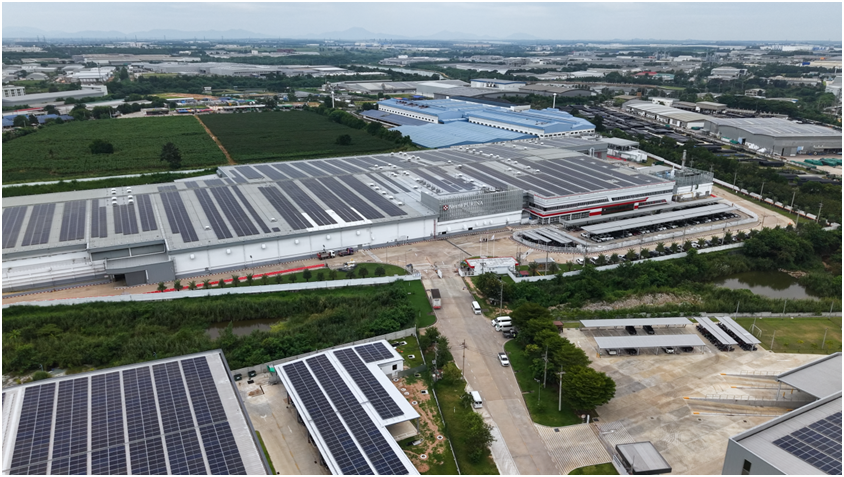

RAYONG, THAILAND / ACCESS Newswire / November 29, 2026 / A DEEP Robotics X30 robot dog now performs daily inspections at all 200 checkpoints in Filling Area 3 of Nestlé’s factory in Rayong Province. The quadruped reads gauges, scans equipment for signs of overheating and listens for compressed air leaks. It alerts staff to potential problems and records what it finds at each stop, reducing the risk of gaps in handwritten inspection logs.
The factory is an important production site for Nestlé in Southeast Asia. Its lines run continuously, and inspectors cover long routes through densely packed equipment. They need accurate readings and a record of each check. The X30 now handles the repetitive rounds. Inspectors use a digital platform to review alerts, assess their significance and coordinate the response.
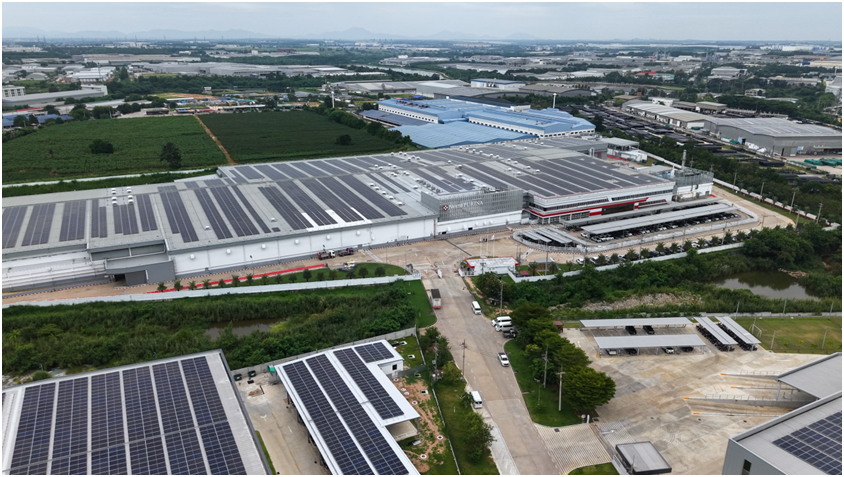
Mapping the inspection route
Filling Area 3 alone has 200 checkpoints. Walking the route takes time, and the same checks must be repeated each shift. Fatigue, shift changes and staffing shortages can all make it harder to complete the rounds consistently.
The X30 mapped the production floor in 3D. All 200 checkpoints were then programmed into its navigation system to plan an efficient route. The robot can follow the full route autonomously, perform several types of inspection on the same round and send the results to a single platform.
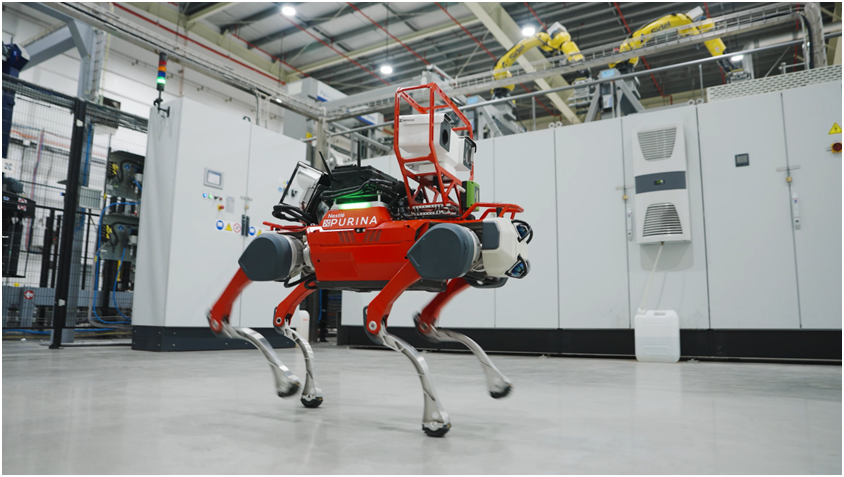
“In our experience, the robot can navigate to the different checkpoints using its positioning system,” said a member of the factory’s inspection team. “We can add or remove checkpoints as needed. In practice, there’s no real limit to how many we can set.” Automating daily checks at all 200 points has substantially reduced the staff time spent on rounds each shift, freeing inspectors to assess and act on alerts.
Spotting equipment faults that are easy to miss
Temperature and vibration are useful indicators of the condition of the motors that keep the lines running. Yet a slight rise in temperature, the first signs of unusual vibration or an invisible air leak can be difficult to detect on a walk-through. Previously, an outside contractor checked for air leaks once a year. A leak that developed between visits could go undetected for months.
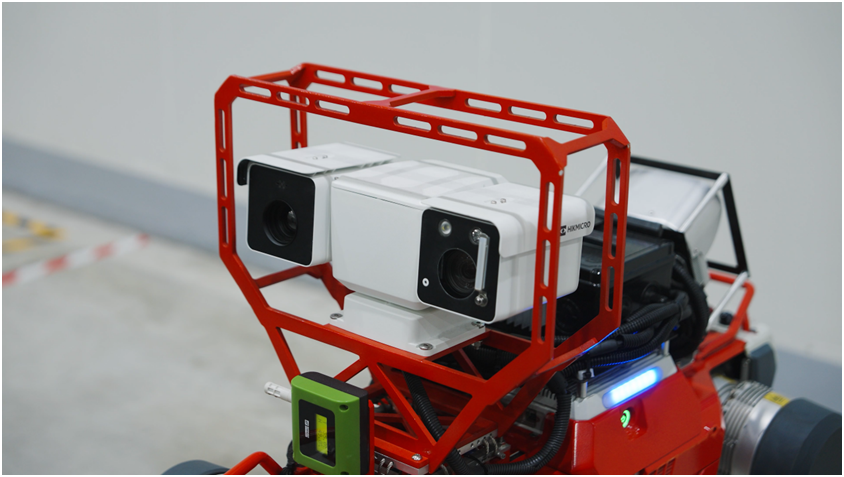
The X30 carries thermal and visible-light cameras on a pan-and-tilt mount, along with an acoustic imager. The visible-light camera reads gauges and checks indicator lights. The thermal camera scans equipment one unit at a time, recording peak temperatures to flag unusual heating. The acoustic imager maps sound sources, helping staff locate compressed air leaks and investigate noise associated with abnormal mechanical vibration. Together, these readings give the team an opportunity to intervene before a fault causes downtime.
Documenting safety checks across shifts
The factory needs a traceable record showing whether required tools and equipment are in place and whether lockout/tagout (LOTO) padlocks are attached at the designated points. Handwritten logs can leave gaps, particularly when one shift hands over to the next.
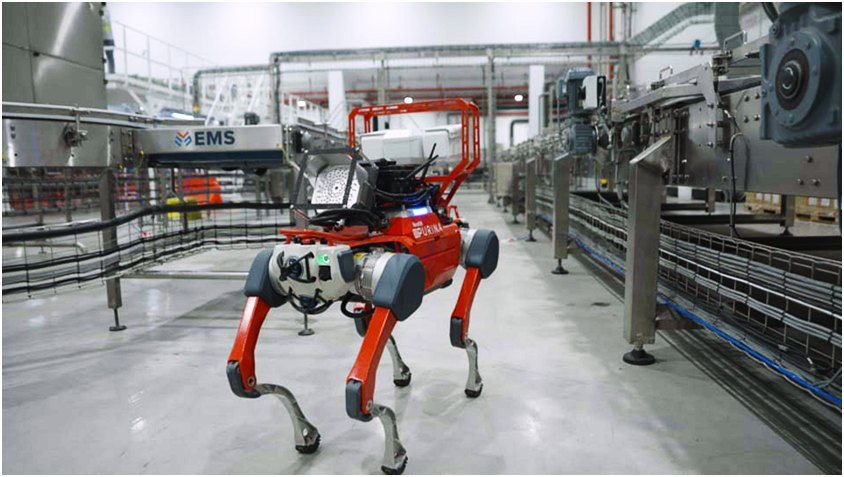
At each designated stop, the X30 checks the visible status of the lock and the locations of tools and other assets. It sends the result to the platform in real time, with an image, timestamp and checkpoint location for later review. “Integrating multiple sensors, including a pan-and-tilt thermal camera and an acoustic imager, on a quadruped robot lets us automatically monitor 200 checkpoints and critical LOTO locks,” said the project lead at GenServ Co., Ltd. “That’s a game changer for predictive maintenance and safety compliance in food manufacturing.”
Keeping rounds on schedule, day and night
The factory typically assigned three employees to each area per shift, with one dedicated to walking the inspection route. A round could take several hours. An interruption could leave a safety check unfinished, so the robot needed enough battery capacity to complete the entire route.
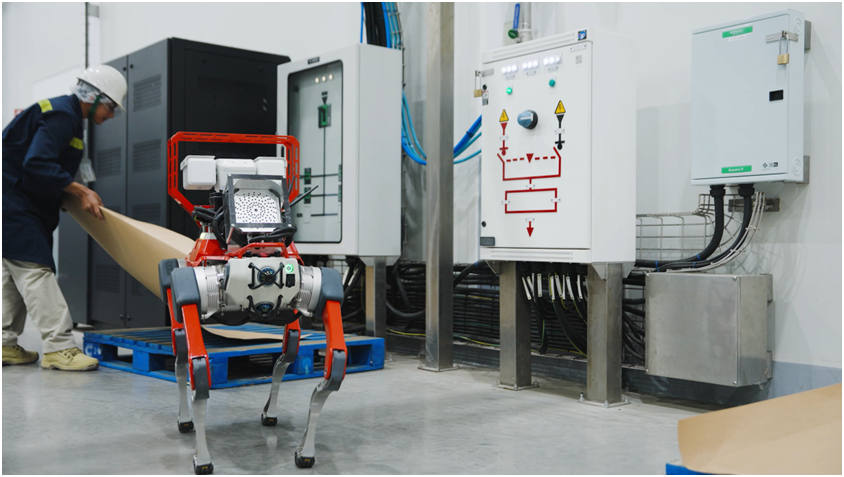
The X30 can operate for about 2.5 hours on a full charge, enough for one complete inspection round at the plant. It then returns to its charger on its own. This allows the factory to schedule rounds across day and night shifts without assigning someone to supervise charging. On-duty staff can review exceptions and coordinate a response from the platform.
From blast furnaces to food production
The Rayong deployment follows DEEP Robotics inspection projects at a blast furnace at Ningbo Steel, a FAW tool and die plant, and a wastewater treatment plant in Tongxiang. Each site places different demands on the robot: the terrain it must cross, the precision its sensors must deliver and the way its tasks fit into the plant’s existing systems.
Across these sites, DEEP Robotics combines a mobile platform, sensors and inspection software in a standardized system designed to cover blind spots, shorten response times and relieve staff of repetitive rounds.
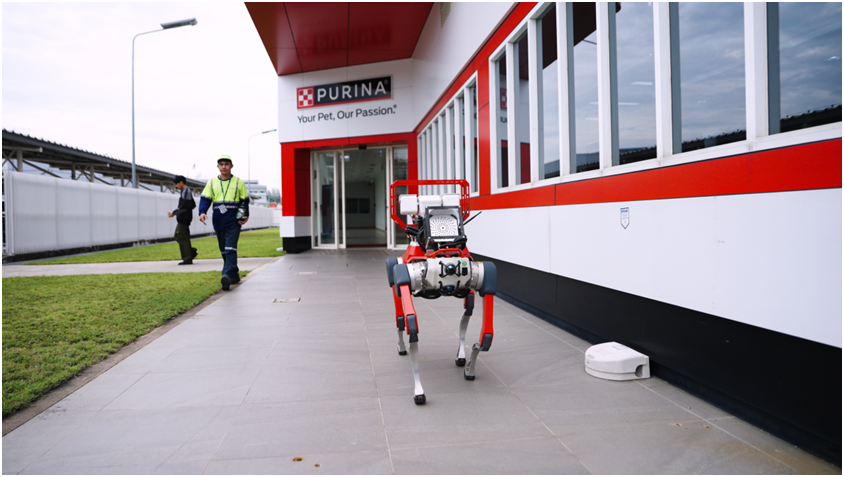
The company’s industrial work puts embodied AI to use in places that are hard for people to reach or unsuitable for prolonged exposure. By taking on repetitive or hazardous checks and flagging small changes in equipment condition, the robots help frontline teams identify risks earlier. DEEP Robotics is applying that field experience to further international deployments as more industrial operators digitize their safety inspections.
Media Contact
Company: DEEP Robotics
Contact: Vivian Chen
Email: chenlingjia@deeprobotics.cn
Website: https://www.deeprobotics.cn/en
SOURCE: DEEP Robotics
View the original press release on ACCESS Newswire

