
AED Service America Warns: Even the Most Prepared Organizations May Have AEDs That Aren’t Response-Ready
Expired electrode pads, improper cold-weather storage, and overlooked maintenance can leave organizations with a false
Press Release Disclaimer: This is a press release distributed through the XPR Media network. It has not been independently verified by our newsroom.
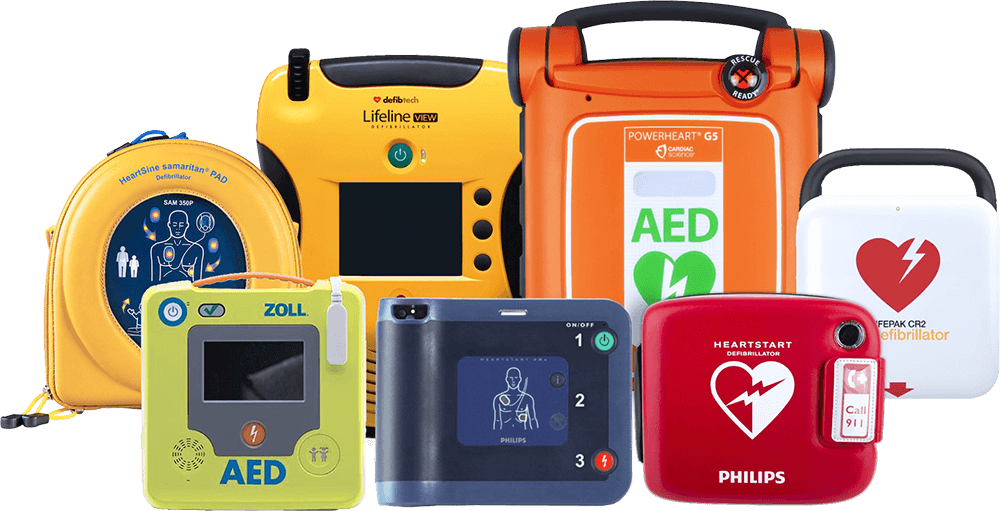

Expired electrode pads, improper cold-weather storage, and overlooked maintenance can leave organizations with a false sense of emergency preparedness.
WINDSOR LOCKS, CT, UNITED STATES, November 23, 2026 /EINPresswire.com/ — When sudden cardiac arrest occurs, having an automated external defibrillator (AED) nearby can mean the difference between life and death. But according to AED Service America, simply having an AED mounted on a wall does not necessarily mean it is ready for an emergency.
The nationwide AED maintenance and management company is raising awareness about a frequently overlooked problem: AEDs that appear operational but have expired electrode pads, neglected batteries, improper storage conditions, or incomplete maintenance records.
Douglas C. Comstock, Director of Business Development of AED Service America, recalls visiting a military installation in western Massachusetts several years ago. During his visit, he had an opportunity to examine six AEDs located throughout one building.
“Every one of the six AEDs I examined had electrode pads that were more than a year past their expiration dates,” Comstock recalled. “I was told the facility had approximately 18 to 20 AEDs. I didn’t verify the others, but finding six out of six with expired pads was certainly concerning.”
What made the experience particularly revealing was that the devices’ daily self-tests had not identified the expired electrode pads.
“Most people assume that if an AED’s status indicator shows it’s ready, everything must be fine. Unfortunately, that isn’t necessarily true,” Comstock explained. “Depending on the model, an AED may successfully complete its automated self-test even though its electrode pads have expired. The device can appear ready while an essential component requires replacement.”
Even Emergency Responders Can Overlook AED Maintenance
Comstock says the problem is not limited to organizations with limited resources or inadequate safety programs.
During his approximately 20 years of experience in the AED industry, he has also encountered emergency medical service organizations storing AEDs in unheated vehicles during harsh Northeast winters or the trunks of police cruisers where temperatures can easily exceed 122F.
“There’s an important distinction between taking an AED outside to treat someone at a football game in freezing weather and leaving that same AED stored in an unheated vehicle for days or weeks when temperatures remain below 32 degrees,” Comstock explained.
“Many commonly used AEDs have a manufacturer-specified minimum operating temperature of 32 degrees Fahrenheit. Their electrode pads contain water-based conductive gel, and prolonged exposure to freezing temperatures can cause that gel to freeze or otherwise deteriorate, depending on its formulation. When that happens, the pads may no longer function as intended, potentially compromising the AED’s ability to deliver effective treatment.”
Comstock emphasized that temporary use in cold weather and prolonged exposure to freezing temperatures are two very different circumstances.
“An AED may be brought outside and used during a winter sporting event, but that doesn’t mean it can safely be stored for weeks in an unheated ambulance or service vehicle. Manufacturers establish specific operating and storage temperature requirements for a reason. Those requirements need to be followed.”
According to Comstock, the issue becomes particularly concerning when organizations that are expected to understand emergency preparedness overlook these basic maintenance requirements.
“If a military installation or an emergency medical service organization can overlook something as fundamental as AED maintenance, imagine how easily the same thing can happen at a public school, corporate office, hotel, or manufacturing facility.”
A Troubling Pattern During Initial AED Inspections
According to AED Service America’s experience onboarding new clients, approximately 25% to 40% of AEDs inspected during initial evaluations have either operational deficiencies or components that are beyond their expiration dates.
Perhaps even more revealing, Comstock says that during the company’s history, only one newly onboarded client had every AED meeting the company’s readiness inspection criteria when technicians arrived.
“Think about that for a moment,” Comstock said. “We’re talking about organizations that have already invested in AEDs because they recognize the importance of protecting employees, students, visitors, and customers. Yet a significant percentage of those devices may not be properly maintained.”
Comstock believes the problem frequently results from a misunderstanding of what constitutes an effective AED maintenance program.
“Organizations often believe that purchasing an AED and assigning someone to periodically look at its status indicator constitutes maintenance. It doesn’t. An automated self-test is not the same as a comprehensive physical inspection.”
The Hidden Risks of Unclear Responsibility
AED Service America identifies several recurring weaknesses in organizational AED programs:
Expired electrode pads and batteries: Components may exceed their manufacturer-designated replacement dates without triggering an obvious warning.
Improper environmental conditions: AEDs stored for prolonged periods in unheated vehicles, outdoor cabinets, or other uncontrolled environments may be exposed to freezing temperatures or extreme heat that compromise critical components.
Unclear program ownership: Responsibility can shift between human resources, facilities, safety departments, and individual location managers without a documented transition.
Incomplete maintenance records: Spreadsheets and internal inventories may not accurately reflect the condition of devices in the field.
Overreliance on automated self-tests: AED status indicators cannot replace comprehensive inspections and proactive component management.
A False Sense of Security
Comstock believes the greatest danger is the false sense of security created when an organization assumes that AED ownership automatically translates into emergency preparedness.
“An AED mounted on a wall may give everyone a sense of security. But unless someone is actively managing that device, its components, its environment, and its maintenance history, that confidence may be misplaced,” Comstock said.
He adds that the consequences of neglected maintenance may not become apparent until the device is urgently needed.
“These aren’t problems you want to discover when someone collapses from sudden cardiac arrest. That’s precisely why comprehensive maintenance programs are so important.”
From AED Ownership to AED Readiness
AED Service America advocates a structured maintenance approach that includes comprehensive onsite inspections, proactive replacement of expiring components, manufacturer-specific maintenance procedures, accurate inventory management, and documented service records.
The company’s nationwide onsite service model is designed to help organizations move beyond simply owning AEDs to maintaining devices that are ready to respond when needed.
“We don’t believe an organization should discover that its AED program has failed during a cardiac emergency,” Comstock said. “The time to identify a problem is during a scheduled inspection, not when someone’s life is on the line.”
“The question isn’t whether your organization has AEDs. The question is whether those AEDs will be ready when someone needs them.”
For more information about AED maintenance, program management, and organizational readiness, visit https://aedserviceamerica.com/.
About AED Service America
AED Service America Inc., headquartered in Windsor Locks, Connecticut, provides nationwide onsite automated external defibrillator (AED) maintenance and program management. The company supports major AED manufacturers and provides comprehensive inspection services, proactive component management, field documentation, and coordinated maintenance programs designed to help organizations maintain response-ready AEDs.
Learn more at https://aedserviceamerica.com/.
Media Contact
AED Service America Inc.
Contact: Douglas Comstock
Email: DC@AEDserviceAmerica.com
Phone: 860-970-3250
Website: https://aedserviceamerica.com/
Doug Comstock
AED Service America
+1 860-970-3250
Legal Disclaimer:
EIN Presswire provides this news content “as is” without warranty of any kind. We do not accept any responsibility or liability
for the accuracy, content, images, videos, licenses, completeness, legality, or reliability of the information contained in this
article. If you have any complaints or copyright issues related to this article, kindly contact the author above.

Media gallery
